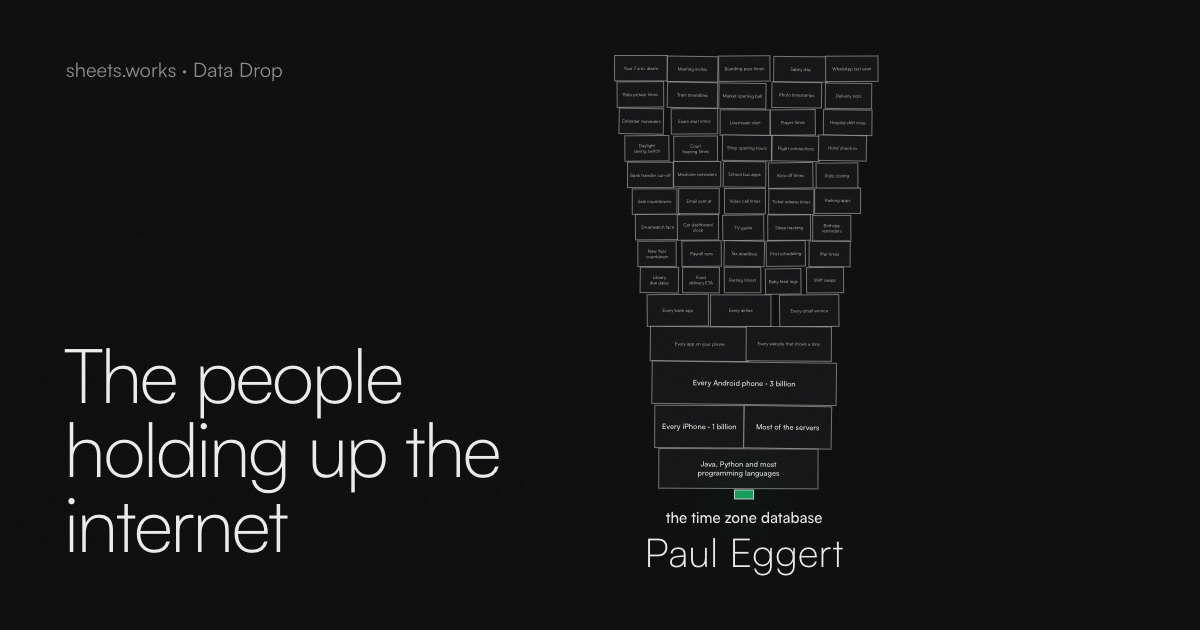
Kind of but smartphones are still in their own little universe. I don’t buy a website from a store like it’s a word processor and install it on my desktop. And that pyramid is specifically focused on phones and how they all interconnect. Laptops and desktops aren’t even mentioned. Using the Internet on a phone is way different than using it on a desktop. It’s like swimming in a bathtub.
I think the disconnect may be due to the article repeatedly mentioning that “this stuff is used by smartphones/websites!!!” but almost never mentioning that full-sized computers exist, even though most of the software being discussed is Linux-primary (and some of it is also used on Windows/Mac, like SQLite). It looked to me like the author’s target audience was “people who use a smartphone as their primary or only device.”


That would be the Internet. POTS was replaced a long time ago, pretty much all cell towers use a fiber backhaul now.
Kind of but smartphones are still in their own little universe. I don’t buy a website from a store like it’s a word processor and install it on my desktop. And that pyramid is specifically focused on phones and how they all interconnect. Laptops and desktops aren’t even mentioned. Using the Internet on a phone is way different than using it on a desktop. It’s like swimming in a bathtub.
Most of the software mentioned in the article runs on most devices.
They really aren’t but I am also not following how things like “every website that shows time” has anything do do with phones.
I think the disconnect may be due to the article repeatedly mentioning that “this stuff is used by smartphones/websites!!!” but almost never mentioning that full-sized computers exist, even though most of the software being discussed is Linux-primary (and some of it is also used on Windows/Mac, like SQLite). It looked to me like the author’s target audience was “people who use a smartphone as their primary or only device.”