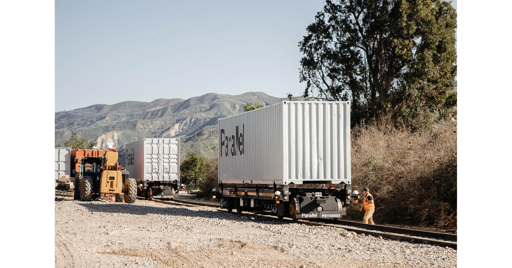
So all this is trying to solve, while introducing a whole lot of other complexities, is the delay caused by trains stopping at intermediary stations? Where individual carriages can part of the main track, allowing others to carry on? And what about railroad crossings? Are most supposed to be dissolved, while centralizing all to fewer that separate rail from passage? Because with all these individual carriages on track, crossings will be occupied a lot more frequently. There’s simply no way to safeguard all of these crossings, and if an event occurs, it disrupts large sections of the network.
It’s not really “trying” to solve anything.
Essentially this is a project designed to get money out of VC rich guys - that kind of rich person can only think of transit in terms of individualised vehicles because that’s all they know.
Bus? No, private car. Airliner? No, private jet. Ferry? Yacht etc. The only way they interact with transport is in a single vehicle that takes specifically them from where they are to where they want to go, the idea of economy of scale just doesn’t enter their worldview.
So this company goes “wouldn’t it be great if your specific container that your company ordered could get to your warehouse directly and not need to worry about all those distribution yards and other people’s stuff in the way” (Spectacularly ignoring the fact that it just spent weeks on a ship from China, saving a day at the end of that makes no difference) And they go damn yes that sounds great here’s $100m
Yay it’s pod time again!
Adam Something video about why this was a dumb idea 3 years ago, looks like it still is, just use trains!
these chucklefucks are still at it? this idea is just completely detached from reality, especially in north america where psr is the norm. the problem isn’t technical, it’s regulatory.
It only makes sense in rail yeards or last mile tracks that would connect to warehouses which the U.S. largely doesn’t have.
rail yards are a solved problem too, since they’re gravity-powered. and for last mile you typically need to do the first 99
Only the major yards are gravity-“powered” hump yards (the gravity does the sorting part, but a locomotive still has to push the consist up from the other side as they’re decoupled). Most yards, the smaller yards trying to serve the last mile, are flat and require manual sorting with a locomotive, and often while blocking the rail line to all other traffic. Plus, they often can’t sort the cars into the ideal shipping order because of dynamics in the train. One of the worst ways to order the cars is with autoracks (automobile carriers) up front and tank or steel coil cars at the back. Autoracks are very light in comparison and have long-stroke draft gear (coupler cushioning). Just slamming the brakes can cause a derailment with that arrangement with column buckling of the train. Or worse, lots of cars only ever get loaded in one direction, such as autoracks and tanks, so they’re empty and even lighter on their return trip. They have to sort heavier cars towards the front or else they risk stringline derailment on curves while pulling.
Yes, we’re aware they need to do the first 99 miles to get to the last mile problem. The problem with rail, as defined by the market, is that trucks do the whole 100. And while yes, the majority of consumer goods rail traffic spent 2 months on the water, the majority of containers were not ordered for the end user or final sales point. They’re warehoused at distribution centers, waiting to refill other DC’s needs. Even Amazon is running full intermodal container trains across the country. It also completely ignores the vast amount of domestic/continental raw goods such as oil, lumber, vehicles, metals, trash, scrap, grain, plastic pellets, lethal chemicals, coal, and, apparently, orange juice.
And I say this as someone that votes for trains. PSR does not solve much. It’s a buzzword for hostile takeovers by investment companies that have no intent on improving infrastructure. It brought some improved shipping status decades later than every other mode of carrier.
okay but we’re talking about the autonomous bogeys here, which addresses none of the issues brought up. that’s why i said that. also, i don’t think anyone believes psr solves any problem whatsoever…
Well… Makes more sense than trying to robotize cars. The track is fixed and speeds and rights of passage are imposed by plain physics.
But you need tracks to implement autonomous freight trains.